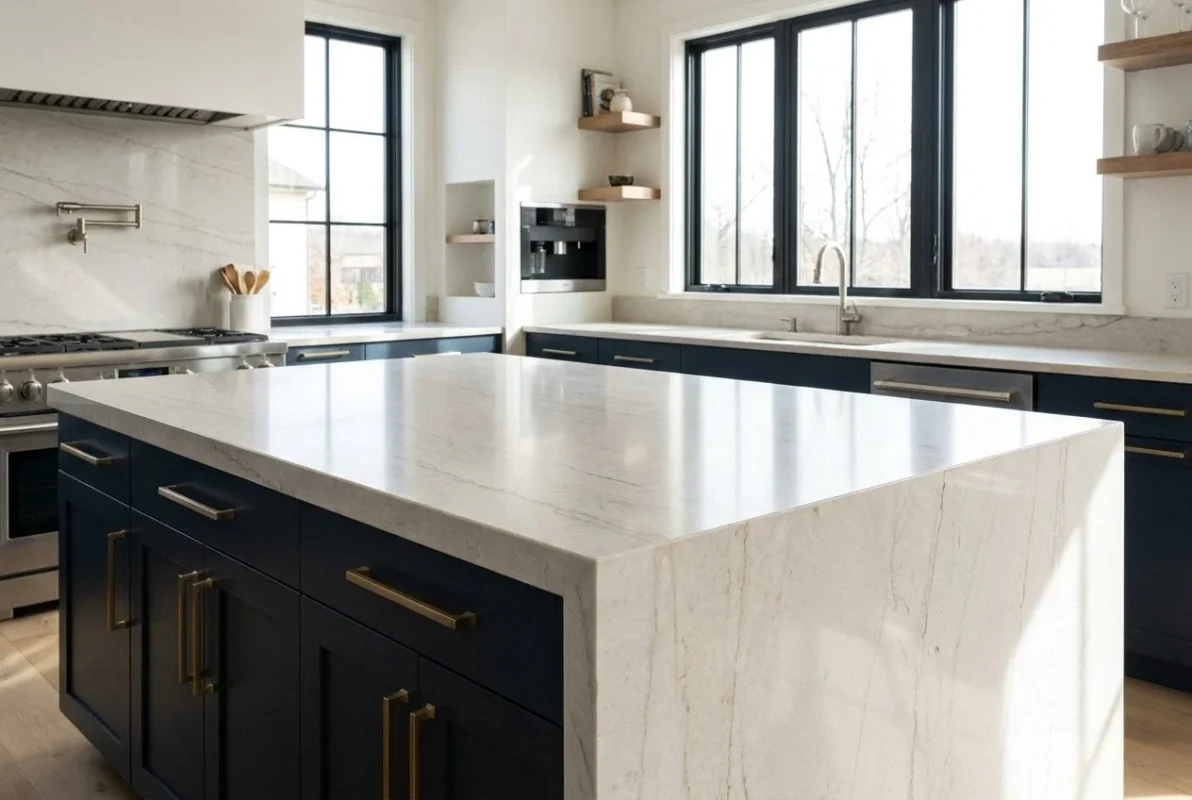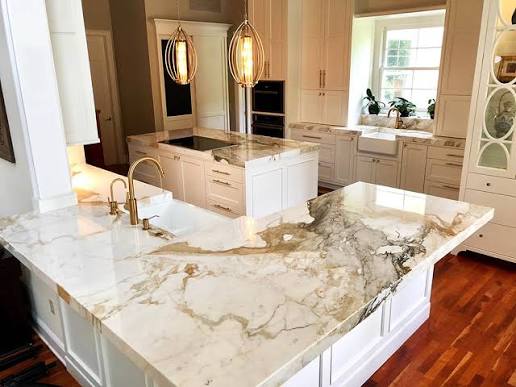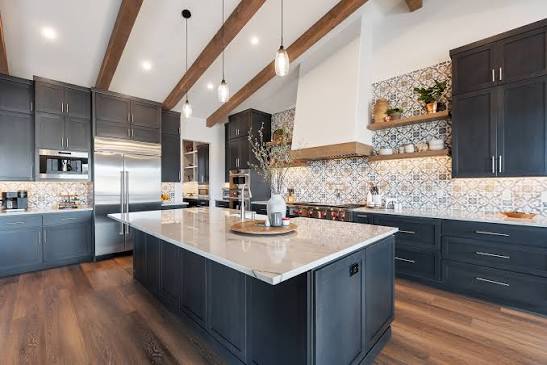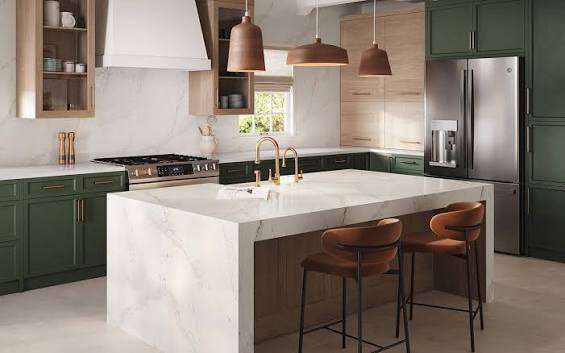

Choosing the right countertop thickness is important when renovating your kitchen. While homeowners often focus on colours and materials, thickness also affects durability, appearance, installation, and cost.
The two most common countertop thicknesses are 2cm (0.79 inches) and 3cm (1.18 inches). Both have advantages depending on the material, cabinet support, and kitchen design.
Homeowners exploring Countertops in Miramar should understand these differences before selecting quartz, quartzite, granite, or marble.
At Factory Direct Cabinets & Granite, we help homeowners and contractors explore countertop options that combine durability, beauty, and functionality.
What Is the Difference Between 2cm and 3cm Countertops?
Countertop thickness refers to the measurement of the stone slab used for installation.
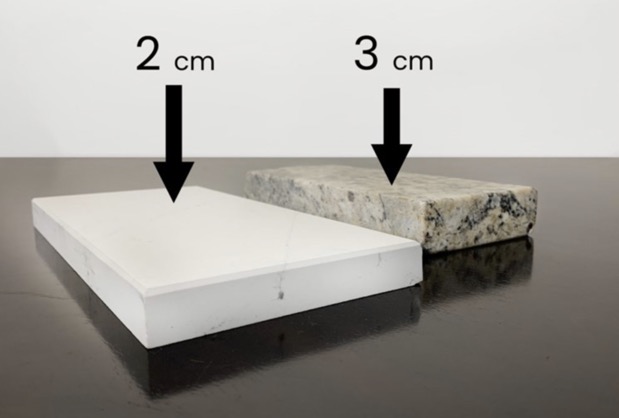
A 2cm countertop offers a thinner, modern appearance, while a 3cm countertop provides a thicker, more substantial look.
2cm Countertops:
- Lightweight compared with thicker slabs.
- Suitable for modern kitchen designs.
- May require additional support.
- Can offer lower material costs.
3cm Countertops:
- Provide greater structural strength for comparable materials.
- Create a thicker, more prominent appearance.
- Often require less additional support.
- Suit traditional and contemporary kitchens.
Homeowners comparing Wholesale Countertops in Orlando should evaluate material quality, installation requirements, and overall pricing before choosing.
Image Suggestion: Side-by-side comparison of 2cm and 3cm countertop edges.
Are 2cm Countertops Durable Enough for Kitchens?
Yes, 2cm countertops can be durable when properly fabricated and installed.
Their performance depends on the material, cabinet structure, countertop dimensions, and installation methods.
Thinner natural stone countertops may require additional reinforcement around sinks, cooktops, or unsupported sections.
Advantages of 2cm countertops include:
- Sleek and minimalist appearance.
- Lower weight than comparable 3cm slabs.
- Compatibility with modern cabinetry.
- Potential material cost savings.
Homeowners considering Quartz Countertops in Aventura may prefer 2cm slabs for contemporary kitchens featuring flat-panel cabinets.
However, proper support and manufacturer guidelines are essential.
Design Tip: Consult your countertop fabricator about reinforcement requirements before selecting 2cm slabs.
Image Suggestion: Modern kitchen featuring thin quartz countertops and handleless cabinets.
Why Are 3cm Countertops Popular for Kitchens?
Three-centimeter countertops are popular because they provide a substantial appearance and generally greater structural strength.
Their thicker profile complements large kitchen islands, Shaker cabinets, and traditional designs.
Benefits of 3cm countertops:
- Greater strength than equivalent 2cm slabs.
- Attractive, substantial edges.
- Often fewer additional support requirements.
- Suitable for numerous kitchen styles.
Homeowners exploring Quartzite Countertops in Hollywood often consider 3cm slabs for larger countertop surfaces.
Quartzite offers natural beauty and durability, although its performance depends on stone quality and installation.
Design Tip: Choose 3cm countertops when you prefer a thicker stone appearance and your cabinets can support the weight.
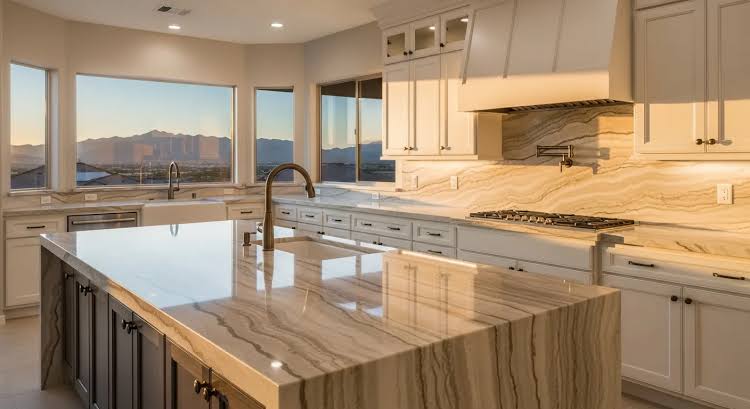
Image Suggestion: Luxury kitchen featuring a 3cm quartzite island with natural veining.
How Does Countertop Thickness Affect Installation Costs?
Countertop thickness influences material expenses, transportation, fabrication, and installation.
Three-centimeter slabs contain more material and weigh approximately 50% more than equivalent 2cm slabs.
However, thicker countertops do not always result in higher overall project costs because some 2cm installations require additional support.
Factors affecting countertop costs include:
- Stone material and availability.
- Slab thickness and dimensions.
- Edge fabrication.
- Cabinet reinforcement.
- Transportation and labor.
- Sink and cooktop cutouts.
Homeowners comparing Granite Countertops in Kendall should request complete estimates for both thickness options.
Cost-Saving Tip: Compare total fabrication and installation costs rather than focusing exclusively on slab prices.
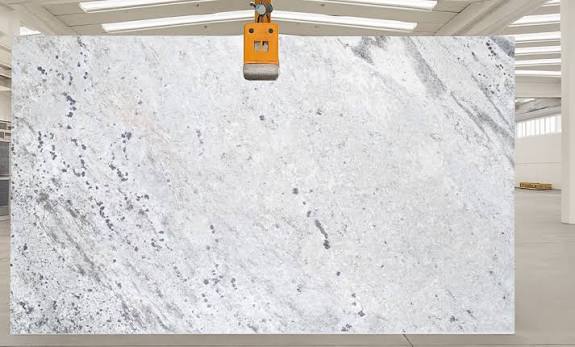
Image Suggestion: Granite countertop fabrication showing different slab thicknesses.
Which Thickness Looks Better in Modern Kitchens?
Both thicknesses create attractive designs, but their visual effects differ.
Two-centimeter countertops provide a slim appearance that complements minimalist cabinetry.
Three-centimeter countertops create a stronger visual presence, making them suitable for traditional kitchens and larger islands.
Popular countertop combinations include:
- 2cm quartz with glossy cabinets.
- 2cm stone with flat-panel cabinetry.
- 3cm granite with Shaker cabinets.
- 3cm quartzite with textured wood cabinets.
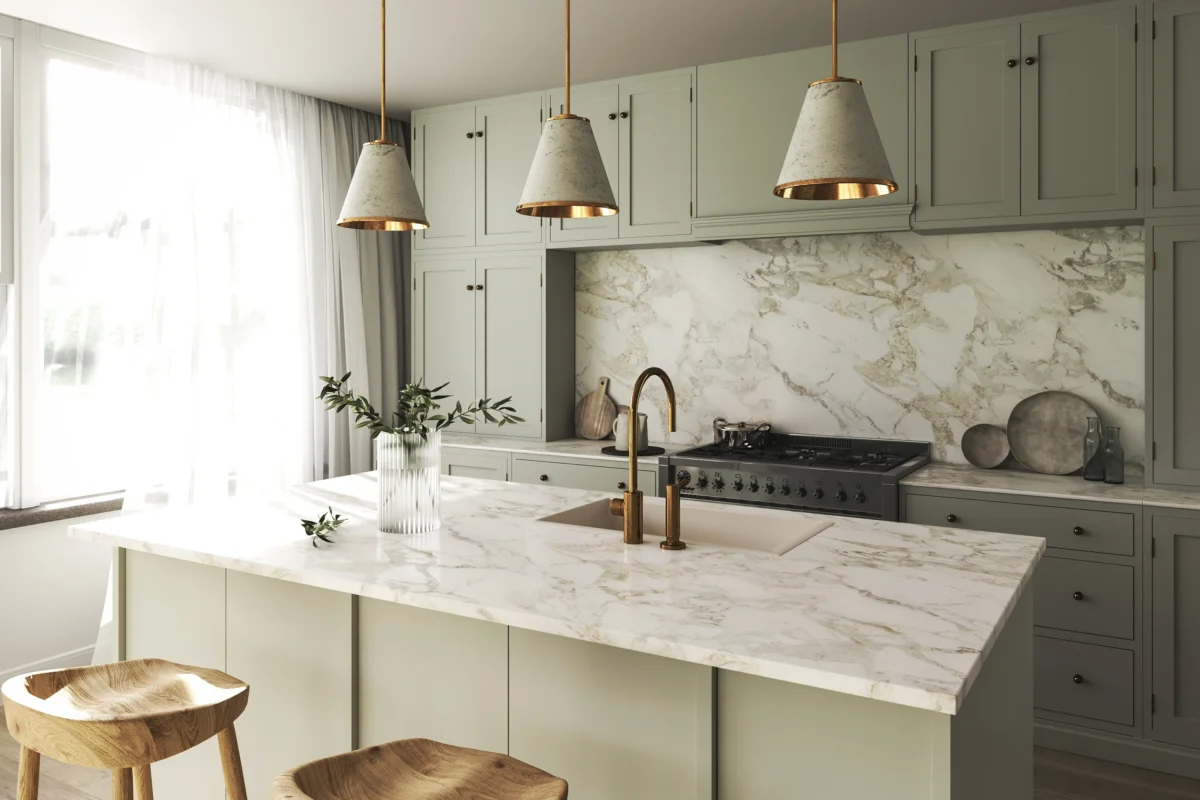
- 3cm marble with traditional cabinetry.
Homeowners considering Marble Countertops in Davenport should also compare available edge profiles.
Mitered edges can create the appearance of thicker countertops without using solid slabs of the same thickness.
Design Tip: Match countertop thickness with cabinet styles and overall kitchen proportions.
Image Suggestion: Two kitchens comparing thin modern countertops and thicker traditional countertops.
Does Countertop Thickness Affect Durability?
Thickness influences structural strength, but material composition, fabrication, and maintenance are equally important.
Granite and quartzite offer different natural characteristics, while engineered quartz requires manufacturer-recommended care.
Marble needs additional attention because acidic substances can cause surface etching.
Important durability considerations:
- Proper cabinet support.
- Professional installation.
- Accurate sink and cooktop cutouts.
- Appropriate cleaning products.
- Material-specific maintenance.
A properly installed 2cm countertop can perform better than a poorly supported 3cm countertop.
Maintenance Tip: Follow supplier recommendations to protect your countertop's appearance and durability.
How Do You Choose Between 2cm and 3cm Countertops?
The best thickness depends on your kitchen design, daily usage, material selection, and budget.
Feature | 2cm Countertops | 3cm Countertops |
Appearance | Slim and modern | Thick and substantial |
Weight | Lighter | Heavier |
Strength | Material-dependent | Generally greater |
Support | May need reinforcement | Often needs less |
Material Cost | Potentially lower | Generally higher |
Kitchen Style | Minimalist | Modern and traditional |
Homeowners comparing Countertop Suppliers in Orlando should ask about slab availability, fabrication costs, installation requirements, and warranties.
Expert Tip: Select thickness based on your chosen stone and installation conditions rather than appearance alone.
Frequently Asked Questions
Is 2cm or 3cm better for kitchen countertops?
Three-centimeter countertops are often preferred for residential kitchens, but properly supported 2cm countertops can also perform well.
Are 3cm countertops more expensive?
They generally cost more in material, although total installation expenses depend on fabrication and support requirements.
Can 2cm countertops be used for kitchen islands?
Yes, provided the material, cabinet structure, and overhang meet installation requirements.
Which thickness is better for quartzite?
Both options can work, but 3cm quartzite is frequently chosen for its substantial appearance and strength.
Find Quality Countertops at Factory Direct Cabinets & Granite
Choosing between 2cm and 3cm countertops requires balancing durability, appearance, installation requirements, and budget.
For many residential kitchens, 3cm countertops offer a practical combination of strength and visual appeal, while 2cm slabs provide a sleek alternative when properly supported.
At Factory Direct Cabinets & Granite, we offer quartz, quartzite, granite, and marble countertop options for homeowners, contractors, and designers throughout Florida.
Visit Factory Direct Cabinets & Granite to compare countertop materials, explore available slab thicknesses, and find the right solution for your kitchen renovation.